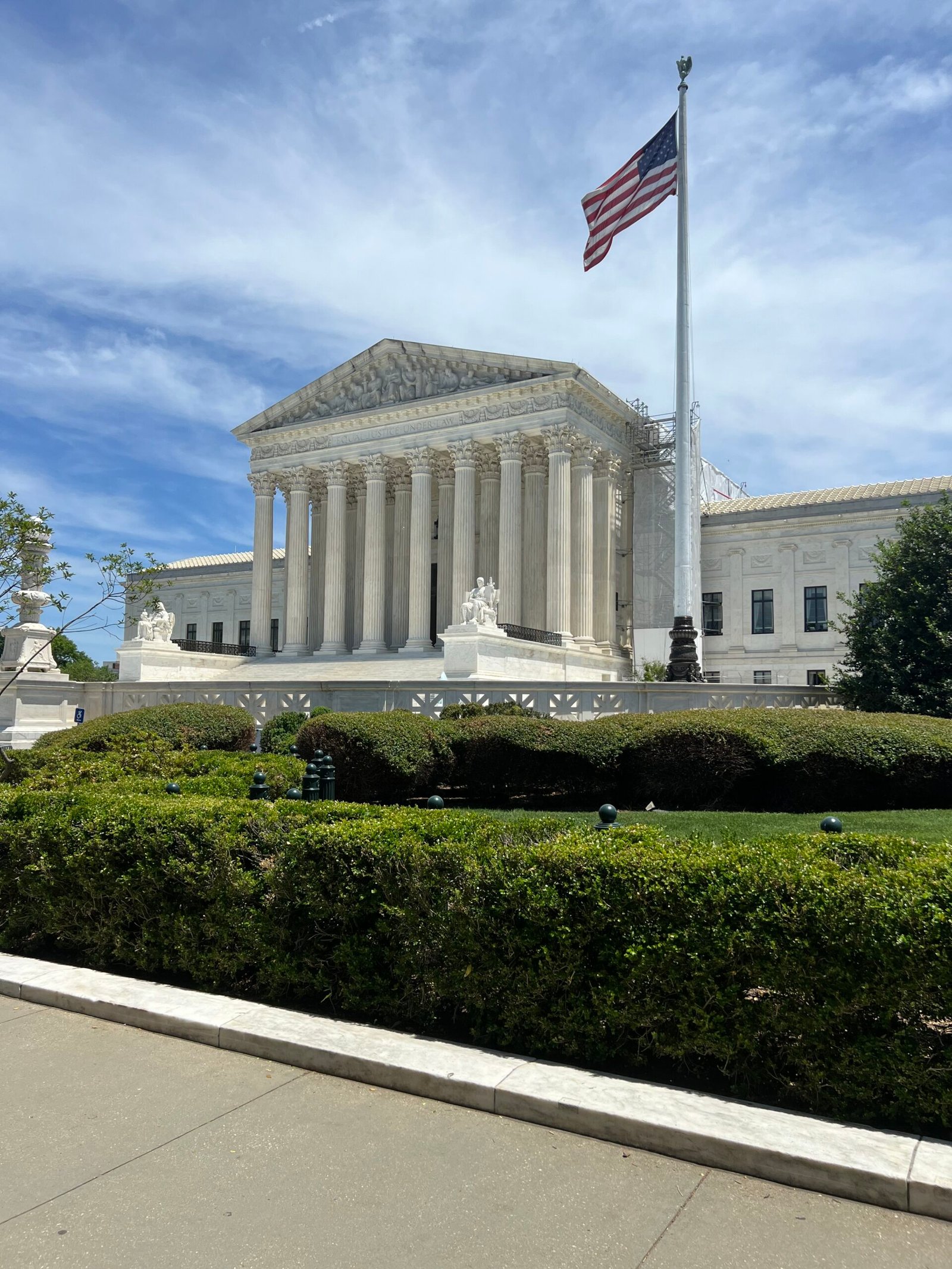
Supreme Court Ballroom Ruling Tests the Limits of Executive Power
Opinion: The Supreme Court’s recent decision allowing construction of the White House ballroom to continue should prompt a larger question than whether one building project survives another court challenge: how much authority should a president exercise when Congress has not clearly authorized a major federal construction decision?
The court’s 5-4 order did not settle the underlying legality of the project. Instead, the majority concluded that the preservation group challenging the construction had a standing problem and that stopping work could create practical harms for the government. That distinction matters. A procedural victory is not necessarily a constitutional endorsement of every action that produced the dispute.
Congressional power should remain visible
The Constitution divides federal power precisely because concentration of authority can produce decisions that are fast but difficult to reverse. Presidents need substantial discretion to manage the executive branch, national security and routine administration. Congress, however, controls appropriations and establishes the legal framework within which federal property is managed.
When an administration moves aggressively, courts are often asked to resolve questions that elected lawmakers have avoided. That can turn judges into the final referees of political disputes. The better answer is not for courts to govern construction policy. It is for Congress to exercise its own authority clearly and early.
Hudson Tribune readers can follow our Opinion coverage, alongside our reporting on executive power and court scrutiny, federal funding decisions, Pentagon leadership changes, public trust in government, and election administration.
Judicial restraint cuts both ways
There is also a legitimate argument for judicial restraint. Courts should not become permanent supervisors of executive projects simply because political opponents dislike them. Standing requirements and separation-of-powers principles exist for reasons. But restraint should not become an excuse for leaving major legal questions permanently unanswered.
The Supreme Court can allow a project to continue while litigation proceeds without declaring that the executive branch has unlimited authority. That nuance should be preserved in public debate. Too often, emergency orders are described as sweeping victories when their actual legal reach is narrower.
The better democratic response
The lesson should be straightforward: Congress should legislate, presidents should administer, and courts should adjudicate. When one branch fails to perform its institutional role, another branch is inevitably pressured to fill the gap.
The current dispute is therefore bigger than a ballroom. It is a test of whether American institutions still insist that major public decisions have identifiable legal authority. Strong presidents are compatible with constitutional government. So are strong courts. But durable democracy requires both to operate within boundaries that lawmakers and citizens can see.