

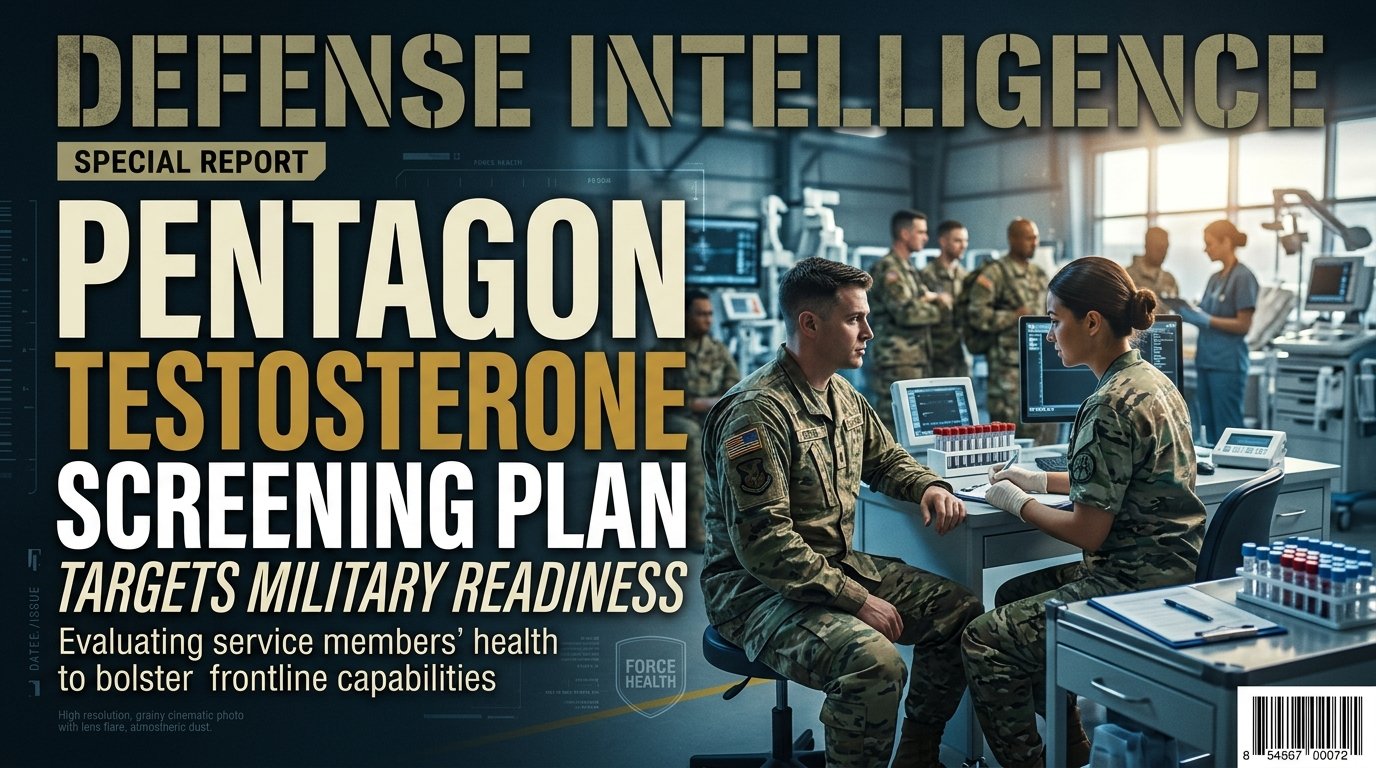
The Pentagon’s testosterone screening policy is bringing renewed attention to men’s health and its potential impact on U.S. military readiness. Under guidance issued by the Defense Health Agency in September 2026, male service members aged 30 and older are to undergo screening for testosterone deficiency during routine military health assessments.
The policy reflects the Department of War’s broader effort to identify medical concerns that could affect the long-term health and performance of military personnel. It also comes amid growing debate among health officials about declining testosterone levels, reproductive health, and the medical needs of American men.
However, identifying a possible hormone deficiency does not automatically mean a person needs treatment. Medical experts emphasize that a proper diagnosis requires clinical evaluation and reliable blood-test results.
Why the Pentagon Is Introducing Testosterone Screening
The Pentagon is presenting hormone screening as part of a wider strategy to maintain a healthy and capable military force.
According to the Defense Health Agency, Secretary of War Pete Hegseth directed the screening initiative in a July 2026 memorandum titled Health and Human Performance Optimization to Enhance Military Readiness.
The September guidance established a clinical framework for evaluating and managing potential testosterone deficiency among male service members. The screening process is designed to identify symptoms and risk factors before medical professionals determine whether further investigation is necessary.
Under the published guidance, men aged 30 and older are screened during periodic health assessments, upon entering military service or during annual physical examinations. Personnel younger than 30 may also be evaluated when they request screening or when a clinician identifies relevant medical concerns.
The policy makes testosterone deficiency part of routine military health evaluations rather than limiting testing to service members who independently report symptoms.
What Officials Say About Low Testosterone and Military Readiness
Adm. Brian Christine, a senior Department of Health and Human Services official and a urologist, has argued that testosterone deficiency deserves greater attention because of its possible implications for military readiness.
In an interview with Fox News Digital, Christine described low testosterone as a concern extending beyond physical appearance or muscle development. He highlighted its potential relationship with men’s broader health and the physical demands of military service.
Christine also raised concerns about the number of young Americans who do not meet military eligibility standards.
According to figures cited in the original report, approximately 77% of Americans aged 17 to 24 do not qualify for military service without a waiver. The report also cited a low level of interest in military service among young Americans.
These figures point to wider recruitment and public health challenges. However, they should not be interpreted as evidence that testosterone deficiency alone is responsible for military ineligibility.
Obesity, chronic illnesses, physical fitness, and other medical or administrative requirements can affect eligibility. The relative contribution of each factor varies, and testosterone screening is only one part of a broader military health strategy.
How the Pentagon’s Testosterone Screening Policy Works
The screening process begins with an assessment of symptoms and potential risk factors. If the initial evaluation suggests a possible deficiency, military medical professionals can determine whether blood testing or additional investigation is appropriate.
The process is intended to help clinicians identify men who may benefit from medical care rather than automatically prescribe hormone treatment.
Does Every Service Member Need Testosterone Treatment?
No. Screening and treatment are separate steps.
The Defense Health Agency’s guidance provides a framework for evaluating possible testosterone deficiency and discussing appropriate care. Treatment decisions depend on clinical findings, symptoms, test results, and individual medical circumstances.
For service members with confirmed deficiencies, clinicians may discuss testosterone replacement therapy or other appropriate interventions. Medical professionals are also expected to monitor patients and adjust treatment when necessary.
This distinction matters because testosterone levels can vary for several reasons. A single low result does not necessarily establish a medical diagnosis.
What Is Testosterone Deficiency?
Testosterone is a hormone that plays an important role in male reproductive development, sexual function, bone health, and muscle maintenance. It also contributes to other aspects of normal bodily function.
Testosterone deficiency, sometimes called male hypogonadism, occurs when the body does not produce adequate testosterone in the context of an underlying clinical problem.
Possible symptoms include:
- Reduced sexual desire.
- Persistent fatigue or reduced energy.
- Loss of muscle mass or strength.
- Erectile dysfunction.
- Reduced bone density.
- Certain mood or concentration changes.
These symptoms are not exclusive to low testosterone. Sleep disorders, depression, chronic illness, medication effects, and other conditions can produce similar problems.
According to the Endocrine Society’s clinical practice guidance, doctors should diagnose testosterone deficiency when compatible symptoms or signs occur alongside consistently low hormone levels measured accurately. Repeat morning testing is generally recommended to confirm the finding. Source: Endocrine Society
Are Testosterone Levels Declining Among American Men?
The supplied report cites Christine’s concerns about a possible long-term decline in testosterone levels among American men.
Christine referred to historical average levels that he said had fallen substantially over several decades. However, those figures should be treated as attributed claims rather than a definitive measure of testosterone trends across the entire U.S. male population.
National trends are difficult to interpret without examining the populations studied, participants’ ages, testing methods, health conditions, and other relevant factors.
NIH Director Dr. Jay Bhattacharya has also highlighted the need for more research into possible changes in testosterone levels and male reproductive health. In remarks reported by Fox News Digital, he acknowledged that the reasons behind the observed trends remain uncertain.
That uncertainty is important. Researchers continue to investigate how lifestyle, obesity, chronic disease, environmental exposures, and other factors may influence hormone levels.
Could Environmental Exposures Affect Testosterone?
Environmental exposures, including chemicals found in plastics, have attracted scientific interest because some substances may interfere with hormonal processes.
However, this does not establish that microplastics are responsible for a nationwide decline in testosterone. More research is needed to determine whether particular exposures cause meaningful changes in hormone levels and how large those effects might be.
A reliable assessment must distinguish between a potential biological mechanism, an observed association, and a proven cause.
Obesity, Chronic Disease, and Men’s Health
Obesity and certain chronic health conditions can be associated with lower testosterone levels. They can also affect physical fitness, energy, and overall health independently of hormone levels.
This overlap makes a comprehensive medical assessment important.
For example, a man experiencing fatigue may have a sleep disorder, a metabolic condition, or another underlying problem rather than testosterone deficiency. Treating the wrong cause could delay appropriate care.
The Pentagon’s screening initiative therefore places emphasis on identifying possible symptoms and risk factors before clinicians decide on further testing or treatment.
The wider public-health question is whether earlier identification of genuine hormone deficiencies can improve long-term outcomes while avoiding unnecessary medical intervention.
What Are the Risks of Testosterone Replacement Therapy?
Testosterone replacement therapy can be appropriate for men with confirmed testosterone deficiency. However, it is not a universal treatment for tiredness, aging, or reduced physical performance.
Treatment requires medical supervision because it can have adverse effects and may not be suitable for every patient.
One important consideration is fertility. Testosterone therapy can suppress sperm production, which may affect men who want to have children. Other potential concerns include increased red blood cell levels and the need to monitor blood pressure and relevant health risks.
The U.S. Food and Drug Administration and medical organizations have also emphasized the importance of using testosterone products according to their approved indications and current prescribing information.
The Endocrine Society recommends individualized evaluation, discussion of benefits and risks, and appropriate monitoring for men receiving treatment.
For military personnel, these considerations are particularly important because medical decisions must account for both individual health and the requirements of service.
What the New Policy Means for the U.S. Military
The Pentagon’s initiative places testosterone screening within a larger discussion about force readiness, recruitment, and preventive health care.
Military personnel operate under demanding physical and psychological conditions. Identifying and treating genuine medical problems may help some service members maintain their health and continue performing their duties.
Nevertheless, the effectiveness of a broad screening program cannot be established by its introduction alone.
Its longer-term value will depend on whether screening accurately identifies clinically significant deficiencies, whether treatment improves meaningful health outcomes and whether the benefits justify the costs and potential risks.
The policy also raises questions about how military health officials will evaluate its results over time.
Ultimately, testosterone screening is one element of a much larger effort to improve military health. Recruitment eligibility, physical conditioning, preventive care and the management of chronic diseases remain important parts of the readiness picture.
Conclusion
The Pentagon’s testosterone screening policy highlights the growing focus on men’s health as part of U.S. military readiness. The September 2026 guidance directs routine screening for male service members aged 30 and older, with further evaluation and treatment based on individual medical needs.
Officials argue that identifying genuine hormone deficiencies could support long-term health and performance. At the same time, medical guidance makes clear that a screening result alone does not establish a diagnosis or justify testosterone therapy.
Further research will be needed to clarify long-term hormone trends, identify the causes of possible changes and assess whether the military’s screening approach delivers measurable benefits.


