

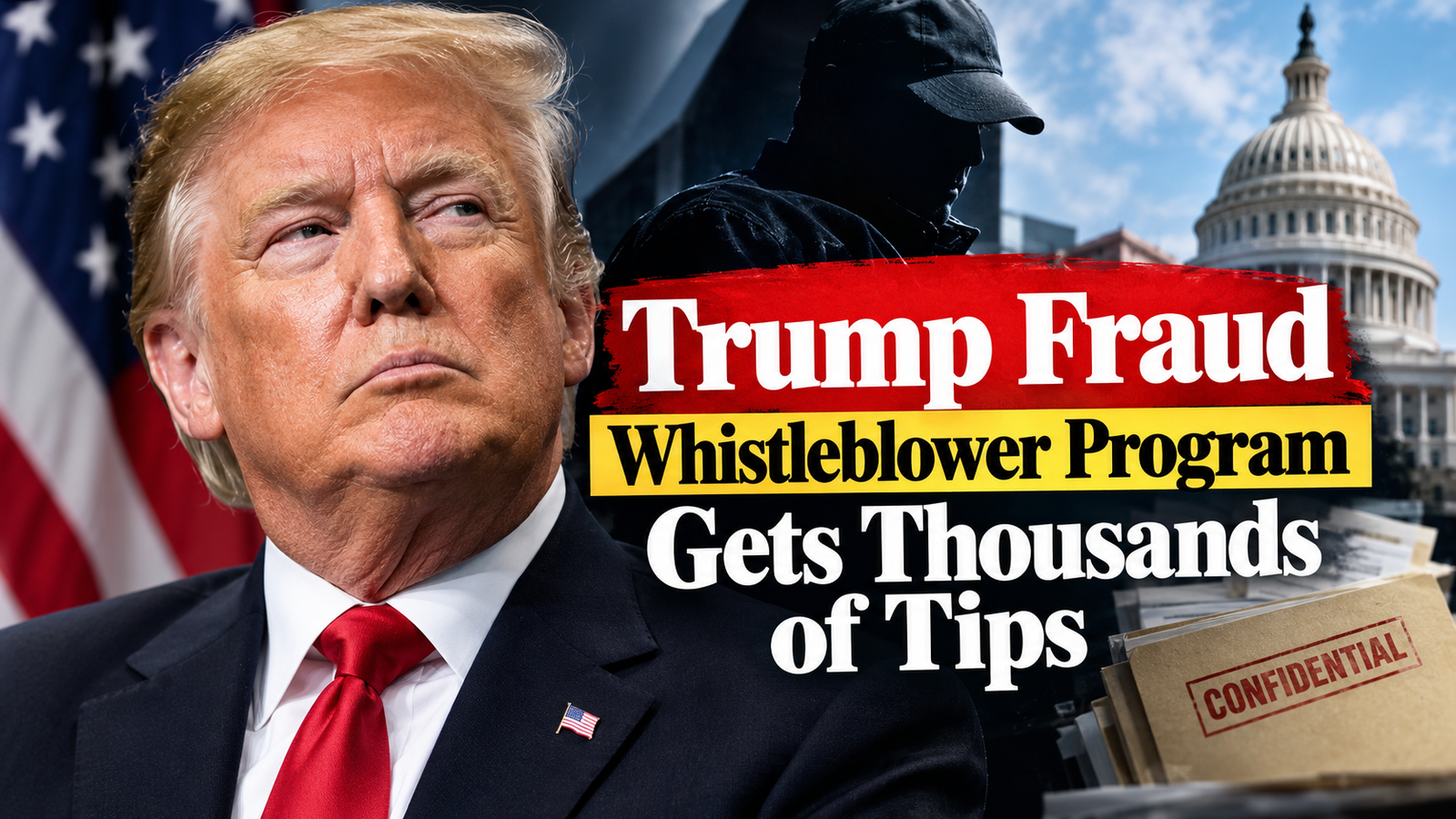
The Trump fraud whistleblower program has received thousands of tips within days of its launch, according to Colin McDonald, assistant attorney general overseeing the Justice Department’s National Fraud Enforcement Division. The early response comes as the administration expands its efforts to investigate suspected fraud involving federal programs and taxpayer money.
McDonald shared the update during an appearance on My View with Lara Trump. He said the new reporting line gives the government another way to identify potential fraud and encourage people to share useful information.
President Donald Trump announced the initiative on October 20, 2026. The program offers financial rewards for qualifying tips that lead to criminal charges in specified cases.
However, submitting a report does not guarantee a payment. The Justice Department must assess the information and determine whether it meets the program’s requirements.
What Is the Trump Fraud Whistleblower Program?
The Trump fraud whistleblower program is a federal initiative designed to help authorities detect fraud involving government benefits, healthcare programs, and other covered public funds.
The U.S. Department of Justice administers the program through its National Fraud Enforcement Division. It aims to encourage people with original, credible information to report suspected wrongdoing.
According to the department’s official guidance, eligible individuals may receive between $10,000 and $30,000 for a qualifying tip that leads to criminal charges.
The program also differs from many traditional whistleblower initiatives. Instead of requiring tipsters to wait until an entire criminal case concludes, it allows the department to consider an earlier reward after qualifying charges are filed and made public.
The DOJ retains discretion over all awards. Therefore, a successful submission does not automatically result in payment.
Readers can review the official DOJ whistleblower rewards program for eligibility rules and reporting instructions.
How Much Can Whistleblowers Earn?
The Justice Department’s published program provides a potential reward of $10,000 to $30,000 for each distinct qualifying tip.
The actual amount depends on the department’s assessment of the submission and the program’s terms. Rewards are discretionary, so applicants should not assume that they will receive money.
To qualify, a whistleblower generally must provide original information voluntarily, submit truthful and complete details in writing, and cooperate with investigators.
The information must also concern a covered type of fraud and lead to qualifying criminal charges.
People who meaningfully participated in the reported criminal activity are generally ineligible, subject to the program’s specific rules.
Which Types of Fraud Qualify?
The program covers certain federal healthcare offenses and fraud involving government programs administered by several federal departments.
These include programs overseen by the departments of Agriculture, Labor, Health and Human Services, Housing and Urban Development, Education, Veterans Affairs, and the Small Business Administration.
Covered cases may involve SNAP benefits, unemployment assistance, student aid, and other eligible government programs.
The Justice Department has also highlighted hospice fraud, home healthcare fraud, daycare fraud, and special services fraud as priority areas.
Not every suspected financial crime falls within the program. Individuals should check the official eligibility criteria before submitting information.
Why Has the DOJ Received Thousands of Fraud Tips?
McDonald said the department received thousands of tips within days of introducing the new reporting channel.
He described the initiative as a new approach to fighting fraud. His comments reflect the administration’s view that investigators need additional ways to identify changing fraud schemes.
Financial incentives may encourage people with firsthand knowledge to come forward. Such information can help authorities identify potential leads, examine records, and decide whether further investigation is warranted.
However, the initial number of tips does not establish how many submissions contain reliable evidence. It also does not indicate how many cases will result in criminal charges or convictions.
The department will need to evaluate the information before the program’s overall effectiveness can be assessed.
SNAP Fraud Investigation Adds to Federal Enforcement Efforts
The new whistleblower initiative comes amid a broader federal crackdown on suspected fraud involving public assistance programs.
One area of focus is the Supplemental Nutrition Assistance Program, commonly known as SNAP. The program helps eligible households pay for food.
According to reporting published on October 25, 2026, a recent 50-day enforcement effort identified approximately $40 million in alleged SNAP fraud involving more than 40 suspects.
These figures describe alleged fraud, not convictions against every person under investigation.
Investigators must establish the facts and follow the legal process before a suspect can be held criminally responsible.
The case also illustrates why federal agencies may seek information from people who have direct knowledge of suspected misconduct. Records, financial transactions, and witness accounts can help investigators assess whether a scheme occurred.
At the same time, enforcement efforts must distinguish genuine fraud from mistakes, incomplete records, and unsubstantiated allegations.
DOJ Plans to Recover Money Linked to Fraud
Finding suspected fraud is only one part of the government’s enforcement strategy. Authorities may also need to trace money and assets connected to illegal activity.
McDonald said the Justice Department is developing an asset recovery team to help locate suspected fraud proceeds and pursue property forfeiture where the law allows.
Asset recovery can involve tracing financial transactions and identifying property purchased with money linked to criminal conduct.
However, recovering funds can be difficult when money has already been spent, transferred, or moved through complex financial arrangements.
The proposed team is intended to strengthen the department’s ability to pursue those assets. Any seizure or forfeiture must follow applicable legal procedures.
The effort forms part of the administration’s broader strategy to investigate suspected fraud, hold offenders accountable, and recover taxpayer money when possible.
How to Report Suspected Federal Fraud
People who have credible information about suspected fraud involving covered federal programs can review the Justice Department’s official reporting process.
The department directs potential whistleblowers to its official rewards program website, which explains the program’s terms and eligibility requirements.
Before submitting a report, individuals should consider the following steps:
- Provide original information: Share specific details that may help investigators assess the allegation.
- Be accurate: Distinguish firsthand knowledge from rumors or unverified claims.
- Follow the official process: Review the department’s instructions and submit information through the established reporting channel.
- Understand the reward rules: A report does not guarantee payment, even if it concerns suspected wrongdoing.
- Cooperate with investigators: Qualifying participants must meet the program’s cooperation requirements.
The DOJ says it will protect information that could reasonably identify a tipster, subject to applicable legal requirements and policy exceptions.
Anyone considering a report should read the official terms carefully before submitting information.
What Happens Next?
The Trump fraud whistleblower program has attracted early attention, but its long-term impact remains uncertain.
The Justice Department must review incoming tips, identify credible leads, and determine whether the information supports further investigation.
The number of criminal charges, the quality of the evidence, and the recovery of funds will provide a clearer picture of the initiative’s results over time.
For now, the program gives federal investigators another potential source of information about suspected fraud involving government benefits and healthcare programs.
Its success will depend on whether the new reporting channel helps authorities turn credible tips into effective investigations while protecting the rights of people accused of wrongdoing.


