

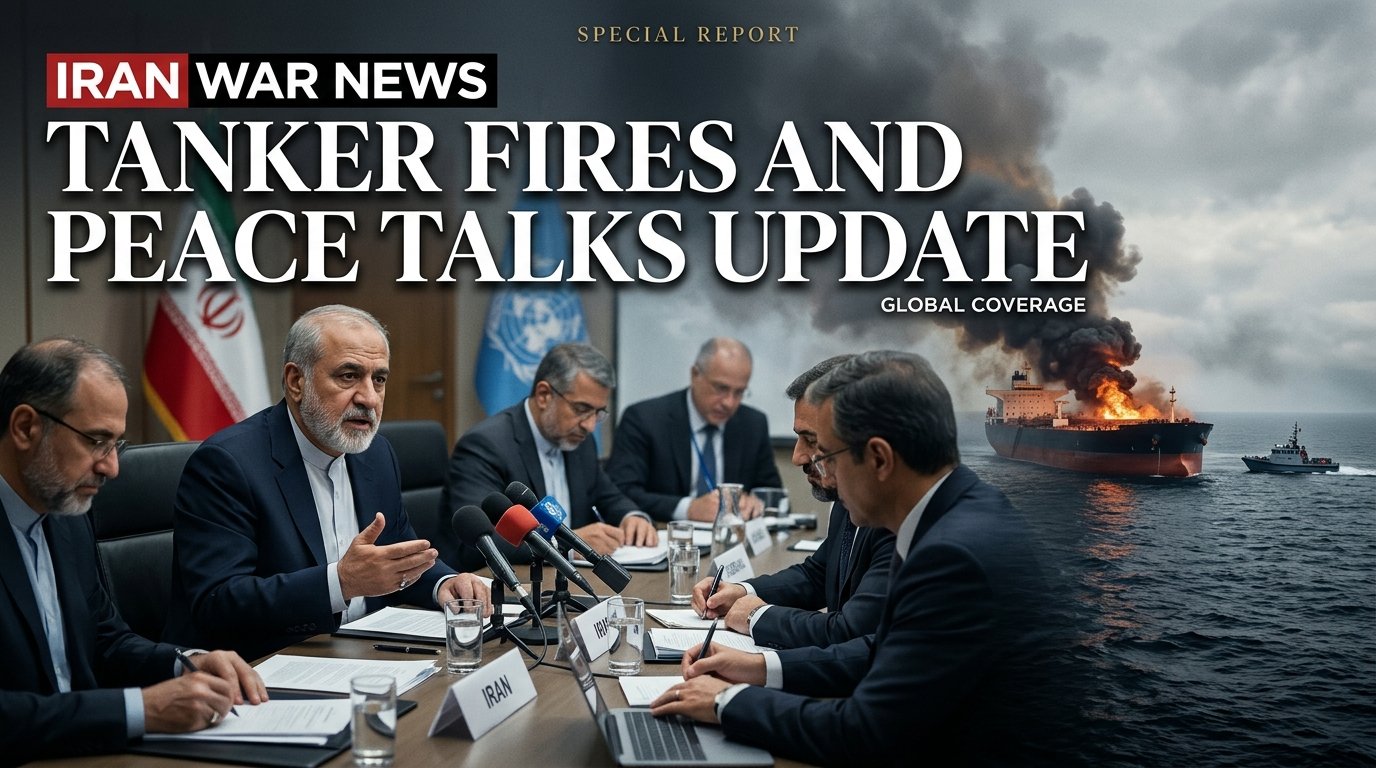
Fresh reports of a vessel burning near the Strait of Hormuz have raised concerns about maritime security as diplomatic efforts to end the conflict involving Iran, the United States and Israel continue.
Iran’s Islamic Revolutionary Guard Corps (IRGC) claimed that three oil tankers struck naval mines while attempting to travel through a southern route in the strait. However, the claims and the identities of the vessels have not been independently confirmed, according to the Associated Press (AP). A UK maritime agency separately reported seeing a ship on fire in the area.
At the same time, Qatar’s latest mediation effort has encountered resistance from Iranian officials. A draft agreement was reportedly presented to Tehran, but a senior Iranian official described the proposals as unacceptable.
The developments have increased uncertainty over commercial shipping, international energy supplies and the prospects for a diplomatic settlement.
Iran Claims Oil Tankers Hit Mines Near Strait of Hormuz
The Strait of Hormuz remains a central point of concern in the conflict because it is an important route for international oil and gas shipments.
Iran said three tankers caught fire after striking naval mines while using a southern shipping route that Tehran considers unauthorised. The United States has encouraged commercial vessels to use that route, while Iran has advocated routes closer to its coastline that it says operate under its authority.
The competing positions have created uncertainty for shipping companies trying to assess the risks of travelling through the waterway.
According to Associated Press reporting, the tanker claims had not been independently confirmed. The UK maritime agency’s separate report of a vessel on fire does not establish that all the incidents described by Iran occurred as claimed.
Why Shipping Security Matters
Any prolonged disruption in the Strait of Hormuz could affect oil deliveries, freight costs and insurance rates for commercial vessels.
Shipping operators must consider the possibility of attacks, sea mines and restrictions imposed by parties to the conflict. Uncertainty about safe routes can also delay deliveries and increase costs for energy companies.
Independent confirmation of incidents and reliable maritime safety information will be important in determining how serious the latest reports are.
Qatar’s Efforts to Secure a Peace Deal Face Challenges
Diplomatic efforts to end the conflict are continuing, but Washington and Tehran remain divided over the terms of a potential agreement.
According to Reuters, Qatari mediators presented Iran with a draft proposal intended to help end the war.
An official briefed on the negotiations said the proposal included a seven-day process involving confidence-building measures by both sides. The official said Iran was reviewing the draft and that a response was expected by the end of the week.
However, a senior Iranian official said the ideas were unacceptable and did not amount to a genuine offer.
Nuclear Issues and Sanctions Remain Key Disagreements
One of the main obstacles is the order in which the two sides want commitments to be made.
Washington wants Iran’s nuclear programme included from the beginning of negotiations. Tehran has demanded that issues including the US blockade of Iranian ports and sanctions on Iranian oil exports be addressed first.
These differences make it difficult to establish a timetable that both sides would accept.
Iranian Foreign Minister Abbas Araqchi has said Tehran remains in contact with intermediaries and is considering how to advance its own proposed framework.
For now, mediation is continuing, but there is no publicly confirmed final agreement.
Reports of Possible US Military Action Add to Uncertainty
Diplomatic activity is taking place alongside reports that the United States is reviewing its options if negotiations fail.
A CBS News live report published on October 29 said regional allies had been warned to prepare for the possibility of renewed US strikes. The report also described continuing uncertainty over whether Washington would resume negotiations or pursue further military action.
Such reports do not mean a decision to launch new strikes has been made. The available reporting indicates that the direction of US policy remains uncertain.
What Further Escalation Could Mean
Renewed military action could create additional risks for shipping, energy infrastructure and regional security. It could also complicate mediation efforts by making it more difficult for the parties to agree on initial steps toward de-escalation.
Regional governments are therefore watching both military developments and diplomatic contacts closely.
Whether negotiations can make progress may depend on the parties’ willingness to address maritime security, sanctions and nuclear policy as part of a broader settlement.
Oil Prices Reflect Concerns About Regional Supply
The conflict has also affected energy-market expectations, particularly because of the importance of the Strait of Hormuz to global shipping.
Reuters reported on October 29 that Brent crude remained near $115 per barrel as traders weighed diplomatic efforts against continuing supply concerns. Prices had eased from higher levels as hopes for renewed talks reduced some fears of a wider escalation.
Oil prices can change quickly in response to reports of attacks, shipping restrictions, production disruptions or progress in negotiations. The latest price movements do not, on their own, establish whether a lasting improvement in supply conditions is underway.
For importing countries, sustained disruption could raise fuel costs and increase pressure on businesses and consumers. For energy producers and shipping companies, uncertainty can complicate decisions about transport, production and future deliveries.
Source: Reuters energy-market analysis.
What to Watch in the Coming Days
Several developments could shape the next stage of the conflict.
- Verification of tanker incidents: Independent reporting may clarify what happened to the vessels near the Strait of Hormuz.
- Iran’s response to mediation: Tehran’s position on Qatar’s draft could indicate whether negotiations have room to progress.
- US policy decisions: Further statements from Washington may clarify whether the priority is diplomacy, economic pressure or military action.
- Maritime security: Any changes to shipping routes or restrictions could affect energy transportation.
- Oil-market movements: Traders will continue assessing developments that could influence global supply and prices.
The situation remains fluid. Reports of a ship on fire and Iran’s claims about tanker incidents have heightened concerns over the Strait of Hormuz, while disagreements over the proposed peace framework continue to limit diplomatic progress.
A lasting settlement would require more than a temporary reduction in tensions. The parties would need to reach an understanding on shipping access, economic restrictions and Iran’s nuclear programme.


