

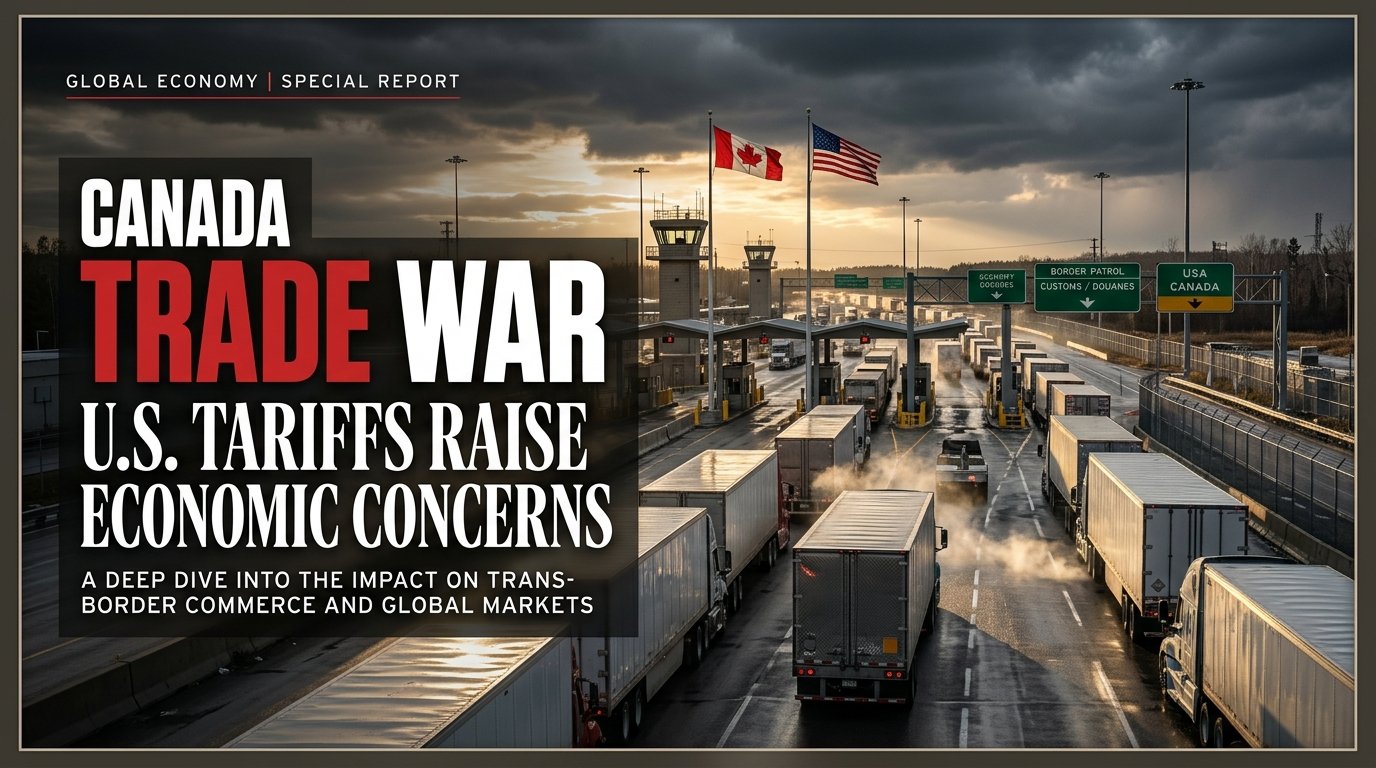
The Canada-US trade war is creating fresh economic challenges for Canadian businesses and households as tariffs disrupt cross-border commerce and increase uncertainty for key industries. The dispute has placed pressure on sectors such as steel, aluminum, lumber, and automobiles, which depend heavily on access to the American market.
The trade tensions have also renewed concerns about consumer prices, employment, and the future of one of the world’s most important bilateral trading relationships.
Under U.S. President Donald Trump and Canadian Prime Minister Mark Carney, trade disagreements have intensified over tariffs, market access, and longstanding differences in trade policy. Although both countries have reasons to protect domestic industries, prolonged restrictions could create additional costs for businesses and consumers on both sides of the border.
Canada Trade War Puts Pressure on Major Industries
Canadian manufacturers and exporters are particularly exposed to changes in U.S. trade policy because the American market plays a major role in their business operations.
Steel, aluminum, lumber, and automobile producers are among the industries facing uncertainty as tariffs increase the cost of cross-border trade. Companies may need to absorb additional expenses, adjust production, or reconsider investment decisions when access to a major export market becomes less predictable.
According to a May 2026 analysis published by the Bank of Canada, the broader tariff dispute has also provided evidence of how trade measures can affect retail prices. However, the specific impact on individual industries depends on the products covered, the applicable tariff rates, and the duration of the restrictions.
For Canadian workers, reduced export activity can create risks beyond manufacturing facilities. Suppliers, transport companies, and other businesses connected to these industries may also face weaker demand if production declines.
Canadian Consumers Face Continued Cost-of-Living Pressure
The Canada trade war is unfolding against a backdrop of elevated household expenses. Tariffs can contribute to higher prices when businesses pass import costs on to customers, although inflation also reflects other factors, including fuel prices, housing costs, and supply conditions.
Statistics Canada’s September 2026 Consumer Price Index report showed that overall consumer prices were 3.1% higher than a year earlier. Prices for food purchased from stores increased by 2.2%, while transportation costs rose by 8.4%.
These figures demonstrate that Canadian households continue to face uneven price pressures across major spending categories. They do not, by themselves, establish that tariffs caused the increases.
A separate Bank of Canada study examined the effect of Canadian retaliatory tariffs introduced in 2025 on selected U.S. products. Researchers found that affected products became approximately 6% more expensive relative to comparable goods that were not subject to those tariffs. Prices moved back toward their earlier relative levels after most of the measures were removed in September 2025.
The findings offer evidence that tariffs can influence consumer prices. Nevertheless, the results relate to a particular set of Canadian counter-tariffs and should not be treated as a direct estimate of the effects of every U.S. tariff on Canada.
Why Canada and the United States Continue to Disagree on Trade
The current dispute reflects longstanding disagreements over market access, tariffs, and domestic economic protections.
One recurring issue is Canada’s supply management system for dairy products. The system regulates production and imports, while tariffs on certain dairy products can make it more difficult for foreign suppliers to compete in the Canadian market.
Some U.S. trade advocates argue that these restrictions limit opportunities for American farmers and exporters. Canadian policymakers, meanwhile, have maintained domestic agricultural policies that protect established sectors.
The United States-Mexico-Canada Agreement (USMCA) provides a framework for trade among the three countries, but it has not eliminated every disagreement.
Other recurring disputes include softwood lumber, steel, and aluminum. These sectors are economically significant because their products support construction, manufacturing, infrastructure projects, and supply chains across North America.
Resolving these issues requires negotiations that balance domestic priorities with the benefits of maintaining predictable trade rules.
U.S. Tariffs Can Also Affect American Businesses and Consumers
Although the Canada trade war places direct pressure on Canadian exporters, the economic consequences are not limited to Canada.
American companies use Canadian materials, energy products, and other inputs in a variety of industries. When tariffs increase the cost of imported materials, U.S. manufacturers and construction businesses may face higher operating expenses.
For example, more expensive lumber can affect homebuilding costs, while higher prices for industrial metals can put pressure on manufacturers that rely on Canadian supplies.
Businesses may respond by searching for alternative suppliers, renegotiating contracts, or passing some additional expenses on to customers. These adjustments can take time and may not fully eliminate the higher costs.
The overall impact depends on the products affected, the availability of substitutes, and whether companies can absorb the added expenses without reducing investment or employment.
Energy Costs Add Another Layer of Economic Uncertainty
Energy prices are another important consideration in the broader economic picture.
Fuel is a major expense for trucking companies, farmers, rail operators, and other businesses involved in moving goods. When diesel and other fuel prices rise, the cost of transporting products can increase throughout the supply chain.
This creates an additional challenge for companies already managing tariff-related expenses. Higher transportation costs may affect food distribution, construction materials, and everyday consumer goods.
However, energy prices are influenced by global supply and demand, geopolitical developments, and other market conditions. They should not automatically be attributed to the Canada-U.S. trade dispute.
For policymakers, the challenge is to assess how trade restrictions interact with these wider economic pressures without overlooking the separate causes of inflation.
What Happens Next in the Canada Trade War?
The future of the dispute will depend on negotiations, government decisions, and the treatment of tariffs under existing trade arrangements.
A negotiated solution could reduce uncertainty for exporters, manufacturers, and businesses that rely on cross-border supply chains. More predictable trade rules would also help companies plan production, manage costs, and make longer-term investment decisions.
On the other hand, prolonged disagreements could encourage businesses to diversify suppliers, redirect exports, or reconsider where they manufacture products. Although such adjustments may reduce dependence on a single market, they can also require significant time and investment.
Canadian households may continue to feel indirect effects if trade restrictions contribute to higher prices for particular goods. American consumers and businesses could face similar pressures where Canadian products and materials are difficult to replace.
Ultimately, the economic consequences will depend on the scope and duration of the measures, as well as the ability of both governments to reach workable agreements.
For Canada and the United States, maintaining a stable trading relationship remains important to businesses, workers, and consumers. The central challenge is to address legitimate trade disagreements without creating unnecessary disruption across the wider North American economy.


