

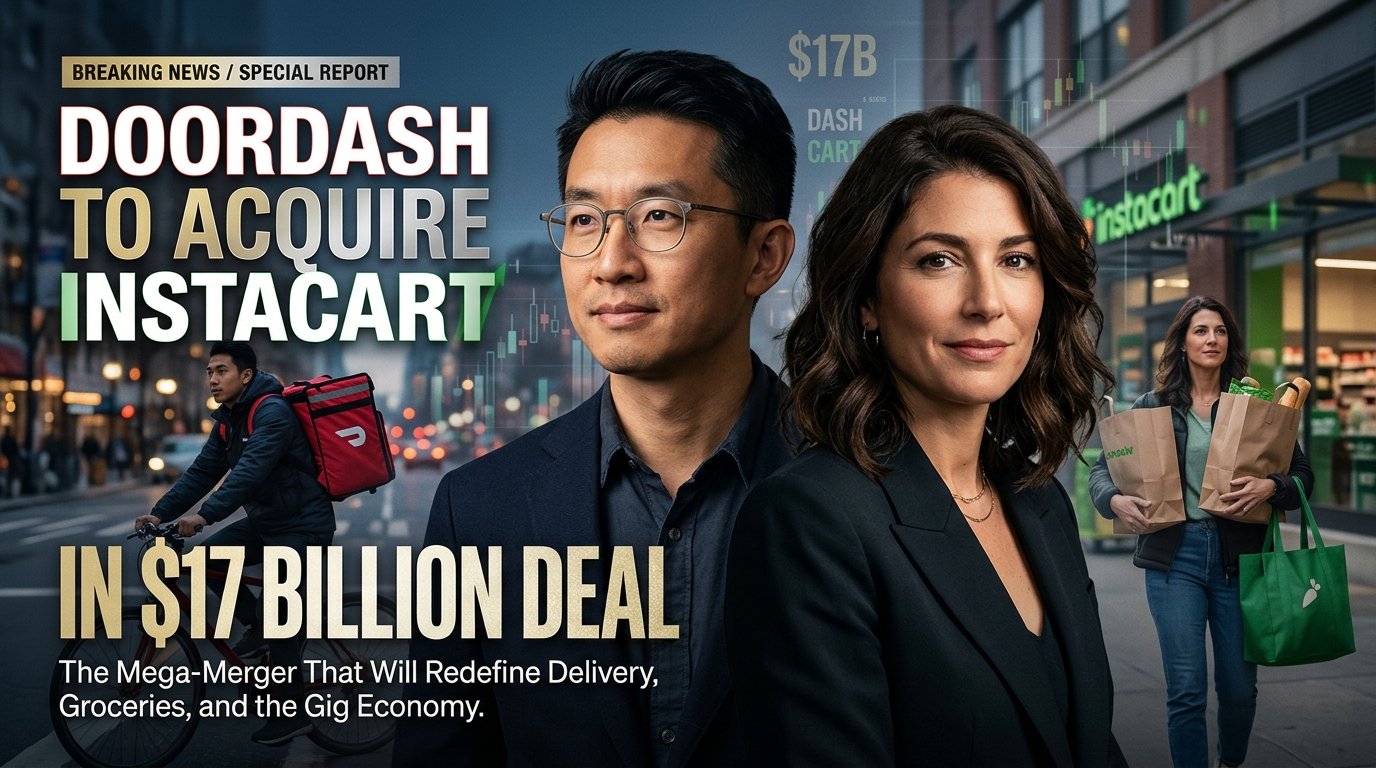
DoorDash has agreed to acquire Instacart in a deal valued at approximately $17 billion, bringing two major delivery platforms under one corporate umbrella. The proposed acquisition could reshape online grocery delivery by combining DoorDash’s delivery network with Instacart’s grocery technology and retailer partnerships.
The companies announced the agreement on October 29, 2026. Under its terms, DoorDash will offer $65 per Instacart share. However, the transaction is not yet complete and remains subject to shareholder and regulatory approvals.
Both companies say the deal could give customers more shopping options while helping local retailers reach more households.
What the DoorDash-Instacart Deal Includes
The agreement values Instacart at approximately $17 billion in equity value. DoorDash is offering $65 per share, representing a 26% premium to Instacart’s closing share price on October 22, before reports of a possible transaction emerged.
Instacart shareholders can choose cash, DoorDash stock or a combination of the two, subject to the agreement’s limits and allocation rules. At least 75% of the overall consideration will be paid in cash, while DoorDash shares can make up no more than 25%.
Instacart’s board has unanimously approved the agreement. Still, the companies must complete the remaining steps before the acquisition can close.
According to the companies’ official announcement, the deal is expected to close at the end of 2027 or during the first half of 2028, subject to the required approvals and other closing conditions.
How the Acquisition Could Affect Grocery Customers
A major goal of the proposed merger is to give customers access to more stores and delivery options.
DoorDash says Instacart customers could eventually shop at more than 50,000 additional stores, on top of the nearly 100,000 already available through Instacart’s platform. The company also expects the combined services to create more opportunities for savings and faster delivery.
However, these benefits are expected outcomes, not immediate changes. DoorDash and Instacart will continue operating independently until the transaction closes.
Could Membership Costs Change?
DoorDash says DashPass and Instacart+ members would be able to use both memberships for the price of one after the deal closes. The company estimates this arrangement could save members a combined $100 million annually in membership fees.
The companies have not completed the acquisition, so customers should not assume their current subscription prices or benefits have already changed. Further details will depend on implementation after closing.
Why DoorDash Wants to Buy Instacart
The acquisition would strengthen DoorDash’s position in grocery delivery, a market that extends beyond its original restaurant-delivery business.
DoorDash launched in 2013 and expanded into grocery and other local-commerce services over time. Instacart, founded in 2012, built its business around grocery delivery and technology that helps supermarkets offer online shopping through their own websites and apps.
Combining these strengths could allow DoorDash to provide more retailers with delivery services, online ordering tools and related technology.
The companies also say their combined capabilities could help independent and regional grocery stores compete with larger retailers that have invested heavily in digital shopping.
That strategy is significant because customers increasingly expect convenient ways to order groceries and everyday essentials online. For retailers, however, delivery services must also make financial sense, including the costs of fulfilment, labour and platform fees.
What the Deal Could Mean for Local Stores and Delivery Workers
DoorDash says the proposed acquisition is intended to help local businesses attract customers while giving delivery workers more opportunities to earn.
The company has also committed to keeping the grocery platform open to retailers that want to work with other delivery services. Under its announced plans, local grocers would not be required to use DoorDash exclusively.
Instacart Shoppers would also retain the flexibility to choose how much they work and which orders they accept. The company says shoppers could choose to take DoorDash orders or continue working only through Instacart.
These commitments could matter to stores and workers who rely on delivery platforms. However, the actual effects will become clearer only if the deal closes and the companies put their plans into practice.
Regulatory Approval Remains a Key Hurdle
Although DoorDash and Instacart have reached a definitive agreement, several steps remain before the acquisition can be completed.
Instacart shareholders must approve the transaction. The companies must also satisfy applicable antitrust requirements and obtain other regulatory approvals, including in Canada and Israel.
The deal could face scrutiny because it brings together two significant players in food and grocery delivery. Regulators may examine how the transaction affects competition, retailers, customers and other businesses in the delivery market.
The proposed combination could increase the companies’ reach, but that does not guarantee approval or mean every promised benefit will materialise.
DoorDash is targeting a closing date between late 2027 and the first half of 2028. Until then, both businesses are expected to continue operating separately.
What Happens Next for DoorDash and Instacart?
For now, customers can continue using DoorDash and Instacart as separate services. The acquisition does not immediately combine their apps, memberships or ordering systems.
If the deal receives the necessary approvals, DoorDash expects to retain Instacart’s brand, app and enterprise technology products. That would allow the company to combine its delivery network with Instacart’s grocery-focused tools while maintaining the established Instacart service.
The proposed acquisition marks a major move in the competition for online grocery orders. Its eventual impact will depend on regulatory decisions, integration plans and whether the combined business can deliver meaningful value to shoppers and retailers.
Until the deal closes, the $17 billion transaction remains a proposed acquisition rather than a completed merger.


