

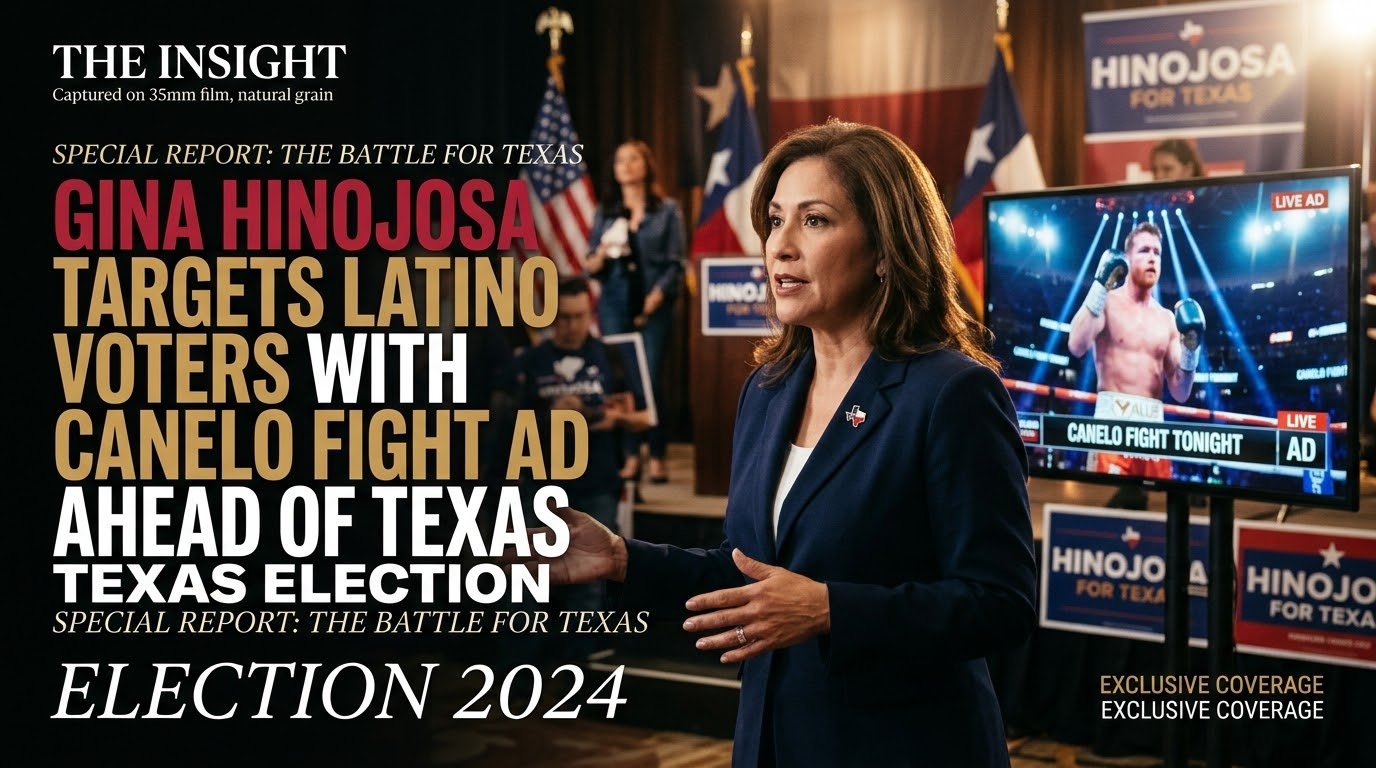
Texas Democratic gubernatorial candidate Gina Hinojosa is turning to boxing to connect with Latino voters as the state’s closely watched governor’s race approaches its final days.
Her campaign plans to broadcast a Spanish-language advertisement during the October 31 boxing match between Mexican superstar Canelo Álvarez and Christian Mbilli. The 30-second commercial will appear on DAZN, the streaming service carrying the event.
The advertisement, titled “No Te Dejes”, uses a Spanish expression that encourages people not to let others push them around. Its central message is a call for Texans to stand up and fight for their interests.
The campaign is particularly interested in reaching Hispanic men, a voting group that could influence the outcome of the November 3 election.
Hinojosa is challenging Republican incumbent Greg Abbott, who is seeking another term as Texas governor. With Election Day approaching, both campaigns are working to attract voters across the state’s diverse electorate.
Why Gina Hinojosa Is Targeting Latino Voters Through Boxing
The decision to advertise during a major boxing event reflects an effort to reach voters through entertainment and cultural programming.
Rather than relying entirely on conventional political commercials, Hinojosa’s campaign is using a popular sporting event to connect its message with viewers who may not regularly engage with political advertising.
Canelo Álvarez has a substantial following among Mexican and Latino boxing fans. His fight against Christian Mbilli provides the campaign with an opportunity to place its message in front of a sports-focused audience.
The advertisement’s title, “No Te Dejes”, also connects with Hinojosa’s broader campaign message, which emphasises standing up for Texas families and challenging established political interests.
The campaign says the commercial contrasts Hinojosa’s policy priorities with Abbott’s record in office.
What Hinojosa’s Campaign Advertisement Says
The advertisement highlights several issues that Hinojosa has emphasised during her campaign.
These include protecting public education, addressing concerns about data centre development and reducing taxes.
Her campaign argues that these priorities would better serve ordinary Texas households than policies it associates with large corporations and wealthy political donors.
The commercial also presents the election as an opportunity for voters to demand greater accountability from state leadership.
However, the advertisement represents the Democratic candidate’s campaign position. Its claims about Abbott’s priorities are political arguments rather than independent findings.
Abbott’s campaign has also made efforts to appeal to Hispanic voters through Spanish-language advertising.
Greg Abbott Is Also Competing for Hispanic Voter Support
Republican Gov. Greg Abbott has not ignored the importance of Hispanic voters in Texas.
His campaign has released Spanish-language advertising criticising Hinojosa’s political positions. The Republican campaign argues that her views do not reflect the values of many Texas Hispanic voters.
Abbott has also highlighted his family’s Hispanic heritage, including his wife, Cecilia Abbott’s, role as Texas’ first Hispanic first lady.
The competing advertising strategies show how important Latino voters have become to both campaigns.
Neither party can assume that Hispanic voters will support a candidate based solely on their ethnic or cultural background. Their political preferences can differ based on age, location, income, immigration views and other concerns.
Latino Voters Could Influence the 2026 Texas Governor Election
The size of the Hispanic population makes Texas an important state for candidates seeking Latino support.
According to the U.S. Census Bureau’s latest QuickFacts estimates, Hispanic or Latino residents account for approximately 40.9% of Texas’ population.
However, population share and voting participation are not the same. Not every Hispanic resident is eligible to vote, and turnout can vary considerably between communities.
Recent polling also suggests that Hinojosa has an opportunity to compete for Hispanic support.
An October 27 N+ Univision and YouGov survey found that Hinojosa led Abbott by 52% to 43% among Hispanic voters surveyed.
The same poll showed Abbott holding a narrow statewide advantage, with 48% support compared with Hinojosa’s 46%.
These findings illustrate an important distinction in the race: a candidate can have an advantage among a particular demographic group while trailing in the overall statewide contest.
The survey included 980 Hispanic registered voters in its additional Hispanic voter sample. Its results should be understood within the poll’s methodology and margin of error.
Why Hispanic Men Have Become an Important Political Audience
The growing competition for Hispanic male voters reflects changes in Texas and national voting patterns.
In the 2024 presidential election, Donald Trump made significant gains among Latino voters compared with earlier Republican presidential campaigns.
Economic concerns, immigration policy, employment and dissatisfaction with established political institutions have all become important subjects in discussions about Latino voting behaviour.
For Democrats, the challenge is to rebuild trust among voters who moved toward Republicans in previous elections.
For Republicans, maintaining those gains is equally important.
That is why campaigns are experimenting with different ways to reach voters, including sporting events, community gatherings, Spanish-language advertising and local outreach.
The approach also recognises that Hispanic voters are not a single political bloc. Their views can differ significantly between generations, regions and individual communities.
Texas Democrats Are Drawing on Lessons From Arizona
Hinojosa’s advertising strategy also reflects a broader effort by Democrats to engage Latino men through activities outside traditional campaign settings.
One example comes from Arizona’s 2024 Senate election.
Democratic Sen. Ruben Gallego used community events, boxing watch parties, rodeos and cookouts to build relationships with Latino voters during his successful campaign against Republican Kari Lake.
Gallego won the Senate race even as Trump carried Arizona in the presidential election.
The result demonstrated that Latino voters do not necessarily vote the same way in every contest. Candidates can build support through local engagement and messages that address voters’ specific concerns.
Chuck Rocha, a Democratic political strategist who previously advised Gallego, is also advising Hinojosa and Texas Democratic Senate candidate James Talarico.
The involvement of experienced campaign advisers highlights the attention Democrats are giving to Hispanic voter outreach in the final stretch of the Texas election.
Economic Concerns and Immigration Remain Important Issues
Economic pressure is another factor shaping the political conversation among Hispanic voters.
Rising household expenses, gasoline prices, grocery bills and housing costs can influence how voters evaluate political candidates.
Immigration policy also remains a significant issue, particularly in communities with strong personal and family connections to the border.
However, voters may hold different views about border security, immigration enforcement and legal immigration.
A recent N+ Univision and YouGov survey found that 56% of Hispanic respondents believed immigration enforcement had gone too far.
The survey also found that many respondents supported combining border security with a pathway to citizenship for long-term undocumented immigrants.
These findings suggest that campaigns must address several concerns rather than rely on a single issue to attract Hispanic support.
When Is the Texas Governor Election?
Texas voters will decide the governor’s race on Tuesday, November 3, 2026, according to the Texas Secretary of State’s official election calendar.
The contest features Republican incumbent Greg Abbott and Democratic challenger Gina Hinojosa.
With Election Day approaching, both campaigns are making their final appeals to voters.
Hinojosa’s decision to place an advertisement during the Canelo Álvarez fight is one example of how campaigns are trying to reach audiences through popular cultural events.
Whether the strategy translates into additional votes remains uncertain. However, the growing competition for Hispanic voters shows how important this electorate has become in the Texas political landscape.
For Hinojosa, the challenge is to turn campaign visibility and voter interest into support at the ballot box.


