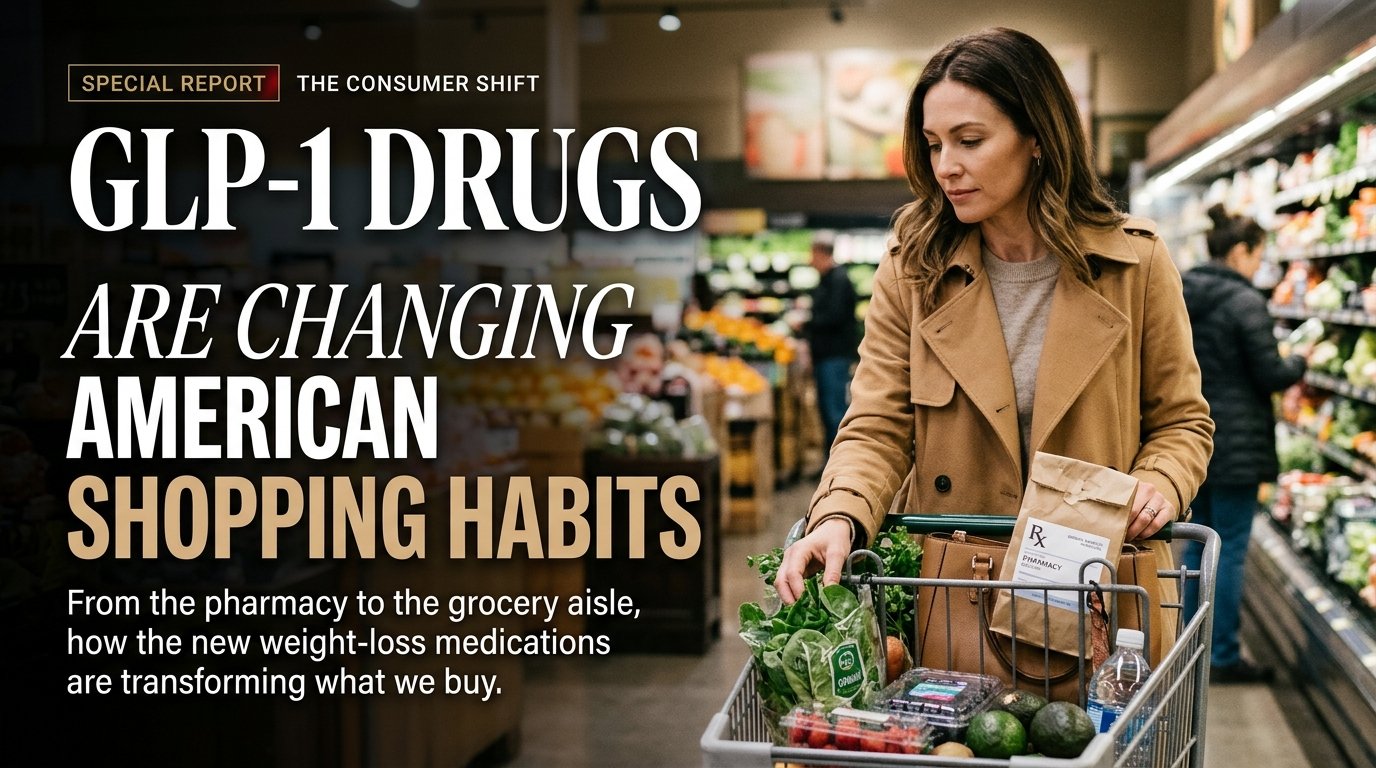
Weight-loss drugs are changing how millions of Americans spend their money. As more people use GLP-1 medications, grocery purchases are falling while clothing sales are gaining momentum.
The trend is creating new challenges for retailers, restaurants, and food companies. According to Oxford Economics, more than 60 million Americans could use these medications by 2030. This growing demand may reshape consumer spending across several industries.
Food spending appears to be taking the biggest hit. People taking GLP-1 drugs often feel less hungry and buy fewer snacks and other food products. Oxford Economics estimates that these households spend around $500 less on food each year.
Additionally, research from Cornell University and Numerator found that grocery spending dropped about 5% among users after they started treatment. Shoppers also bought fewer sweet snacks and savory products. However, purchases of fresh produce and yogurt increased.
Meanwhile, clothing retailers may benefit from the growing trend. Oxford Economics estimates that GLP-1 users spend around $200 more annually on apparel. Many people also replace clothes as they lose weight and move into smaller sizes.
The change could create a major opportunity for fashion brands. Oxford Economics estimates that millions of new users could generate billions of dollars in additional clothing sales.
Beyond shopping, these medications could also improve workers’ health. Healthier people may stay in the workforce longer and become more productive. As adoption grows, GLP-1 drugs could influence both consumer behavior and the wider U.S. economy.