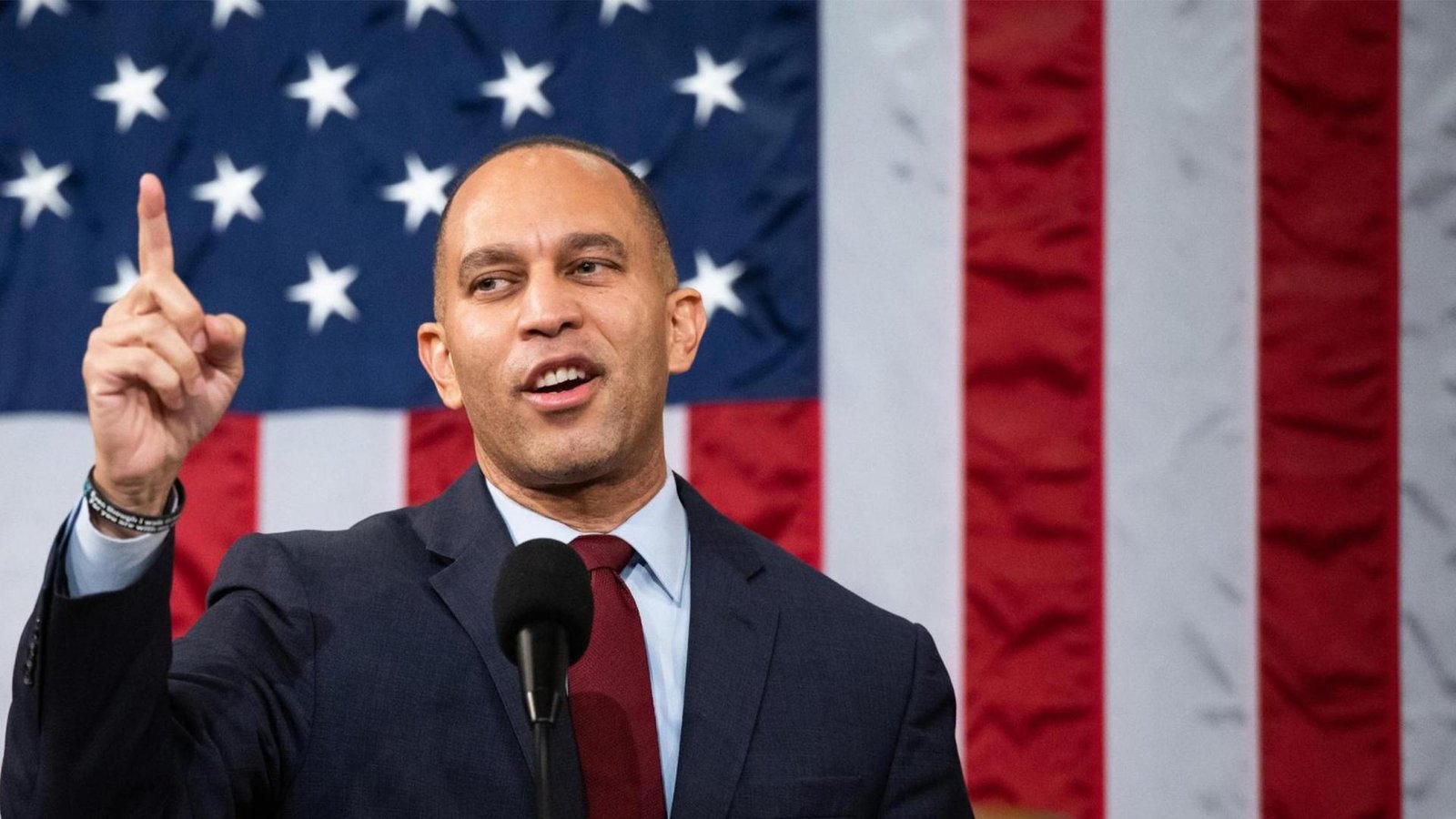
Hakeem Jeffries Signals Party Response After House Vote
House Democratic Leader Hakeem Jeffries is confronting an internal party dispute after two House Democrats joined Republicans on a politically charged resolution, prompting renewed questions about party discipline ahead of the midterms.
Democrats Face an Internal Dispute
The Guardian reported September 2 that Reps. Marie Gluesenkamp Perez and Jared Golden voted with Republicans on a resolution condemning socialism. The vote also became linked to debate surrounding President Donald Trump’s SAVE America Act, making it politically sensitive for House Democrats.
Jeffries responded by indicating that the party would take the votes seriously. The dispute highlights the difficulty Democratic leaders face when members represent districts with different political pressures from the national party.
Why Cross-Party Votes Matter
Members of Congress occasionally vote with the opposing party, especially on resolutions that do not directly determine federal spending or major policy. Party leaders, however, can view certain votes as signals about political alignment or caucus loyalty.
For Democrats, the issue is particularly relevant because the party is preparing for competitive midterm contests. Members in swing districts may need to balance national party positions with the preferences of their local electorates.
Jeffries and the House Democratic Caucus
As minority leader, Jeffries is responsible for coordinating House Democrats, developing messaging and negotiating with Republican leadership. His challenge is to maintain a unified caucus without alienating members who face different electoral realities.
The party’s internal debate also reflects a larger question about how Democrats should position themselves against Trump. Some members favor a confrontational approach, while others emphasize bipartisan cooperation or distance from labels that Republicans can use against them in competitive districts.
The Midterm Context
The November elections will determine whether Republicans retain control of the House and Senate. That makes every competitive district important, and party leaders are increasingly focused on candidate positioning, fundraising and voter turnout.
Republicans can use Democratic disagreements to argue that the opposition party is divided. Democrats, meanwhile, are likely to emphasize issues where they believe the administration is vulnerable, including economic conditions, government spending and executive power.
District Politics Can Override National Strategy
Gluesenkamp Perez and Golden represent districts where political calculations may differ from those of Democratic lawmakers in heavily liberal areas. Members in competitive districts often have incentives to demonstrate independence from national leadership.
That dynamic is common in Congress, where lawmakers must simultaneously serve their party, their constituents and their own political futures. Party leaders can encourage unity, but they cannot eliminate the local pressures that shape individual votes.
What Comes Next
The immediate dispute is unlikely to determine the entire midterm campaign, but it provides an early example of the challenges both parties face in maintaining coalitions. Jeffries will have to balance discipline with the political independence of individual members as the election season intensifies.
The episode also shows how relatively narrow congressional votes can become national political stories when they touch on ideological identity. With the midterms approaching, both parties will be watching closely for additional signs of internal division.
Sources: The Guardian; Office of the Clerk of the U.S. House; House Democratic Leader.