

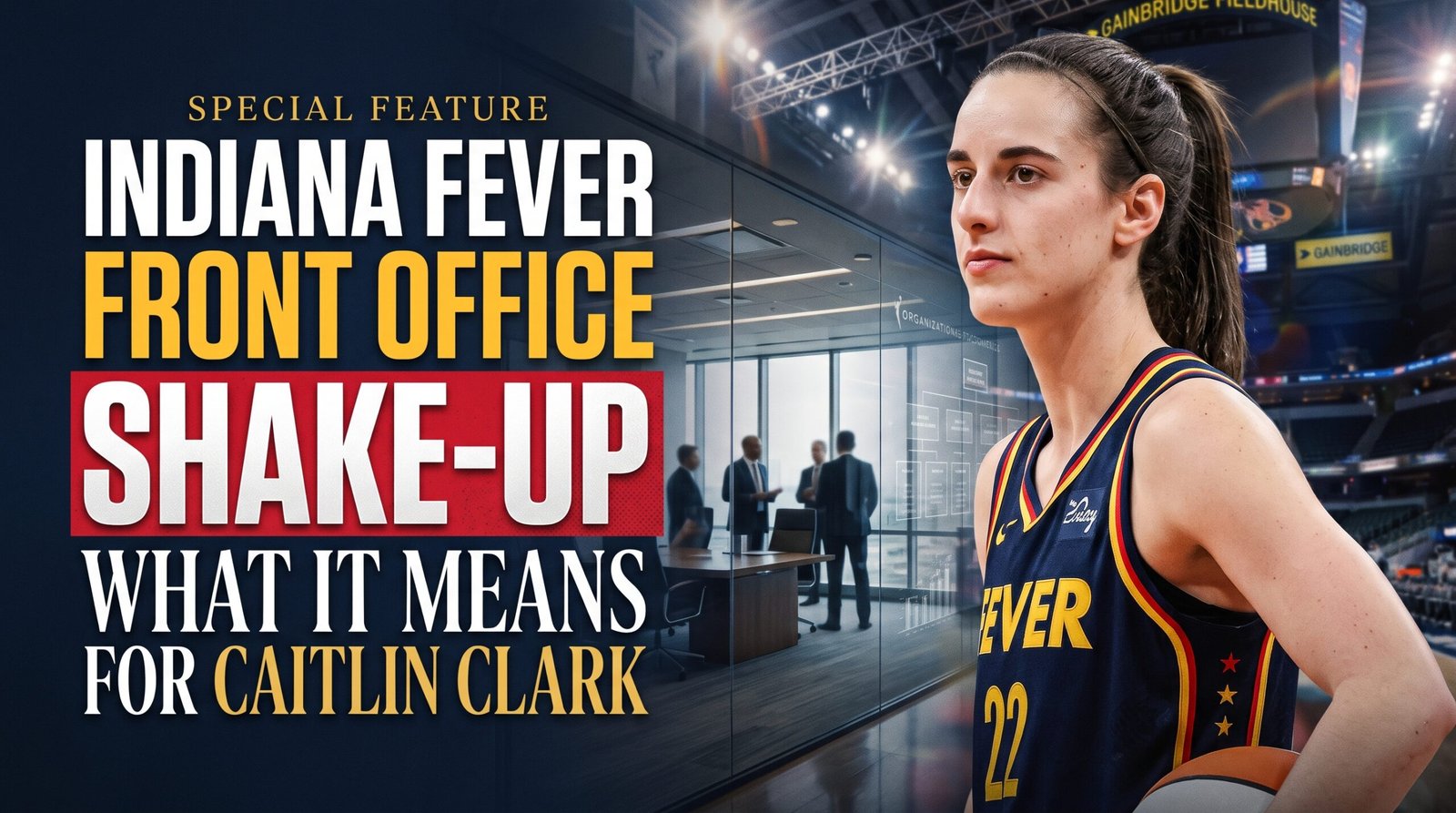
The Indiana Fever front office shake-up has created major questions about the franchise’s future, its championship ambitions, and the players who will lead the team next season. On October 23, 2026, team president Kelly Krauskopf announced she would step down, and the organization confirmed the departure of general manager and chief operating officer Amber Cox later that day.
The leadership changes arrive after a disappointing postseason. Indiana finished the 2026 regular season with a franchise-record 28 wins but lost to the Las Vegas Aces in the first round of the WNBA playoffs.
Now, the Fever must prepare for an important offseason involving roster decisions, contract negotiations, and questions about the team’s culture. With Caitlin Clark remaining central to the franchise’s future, the next leadership group will face pressure to turn Indiana’s popularity into sustained success on the court.
Why Did the Indiana Fever Change Their Front Office?
The departures of Krauskopf and Cox mark a significant transition for an organization that has experienced enormous attention since Clark joined the team in 2024.
According to Fever’s official announcement, Krauskopf decided to leave her position before the end of the 2026 regular season. Her departure ends a long association with Pacers Sports & Entertainment and the franchise she helped establish.
Cox’s exit followed hours later. The organization announced that her departure as chief operating officer and general manager was effective immediately. Pacers Sports & Entertainment said it would conduct a national search for the next general manager.
Although the moves happened on the same day, the team has not established that a single issue caused both departures. They nevertheless leave Indiana facing important leadership decisions before the next season.
Kelly Krauskopf’s Legacy With Indiana
Krauskopf helped build the Fever from their beginnings in 2000. During her earlier tenure, Indiana became a consistent postseason contender and won its first WNBA championship in 2012.
She later joined the Indiana Pacers’ front office before returning to the Fever in 2024. Her latest departure closes a significant chapter in the franchise’s history.
Amber Cox’s Departure Creates Another Opening
Cox joined Indiana in 2024 and helped oversee the organization during a period of increased attention and competitive expectations.
Under her tenure, the Fever reached the playoffs in consecutive seasons, won the 2025 Commissioner’s Cup, and recorded a franchise-best 28 regular-season victories in 2026.
However, Indiana’s early playoff exit highlighted the gap between regular-season progress and its ultimate championship goal. The search for a new general manager will be an important part of the team’s offseason planning.
Caitlin Clark and the Pressure to Build a Championship Team
Clark’s arrival transformed the Fever’s public profile and brought unprecedented attention to the team. That visibility creates opportunities for the franchise, but it also increases expectations.
Indiana must build a roster capable of competing with the WNBA’s strongest teams while maintaining a supportive environment for its players.
The new leadership will need to evaluate several priorities, including roster depth, player development, defensive consistency, and long-term contracts. It must also determine how best to support Clark as she continues to develop her role as a franchise centerpiece.
The fever’s challenge is not simply to attract attention. They must use their resources effectively and build a team that can compete deep into the playoffs.
Kelsey Mitchell’s Future Becomes a Major Offseason Story
Kelsey Mitchell’s contract situation is another important issue following the front-office changes.
The All-Star guard is approaching unrestricted free agency, making her future one of Indiana’s most consequential roster questions. Retaining her would help preserve the team’s established backcourt partnership with Clark.
However, contract negotiations will take place alongside decisions about the team’s wider roster and leadership structure.
Mitchell has also spoken publicly about the challenges of playing for a franchise under intense scrutiny. During her postseason exit interview, she described receiving online hate and explained that being Clark’s teammate can bring additional criticism.
Her comments underline why Indiana’s offseason decisions must account for more than basketball statistics. The organization needs to understand what its players want from their working environment and their future with the team.
Fan Controversy and the Fever’s Reputation Across the WNBA
The Fever’s growing popularity has also brought difficult questions about fan conduct and the atmosphere surrounding games.
In an October 2026 report, The Athletic examined concerns from players, agents, and other league figures about the Indiana fan experience and the franchise’s reputation. The discussion included reports of online harassment and uncomfortable interactions at games.
These concerns became more prominent after an incident during Indiana’s playoff series against Las Vegas involving Aces star A’ja Wilson and a Fever supporter. The incident prompted renewed debate about player safety, fan behavior, and the treatment of athletes.
The issue is sensitive and requires careful consideration. The actions of individual supporters should not automatically be attributed to an entire fan base. At the same time, players’ accounts of harassment deserve to be taken seriously.
What Kelsey Mitchell and Caitlin Clark Have Said
Mitchell’s exit-interview comments highlighted the emotional impact of the attention surrounding the fever. She explained that players sometimes face criticism simply because they share a team with Clark.
Clark also expressed concern about her teammate’s experiences. She said she did not support people using her name to promote racist rhetoric, hate, or discrimination.
These statements are relevant to the franchise’s next steps because a successful team needs more than talented players. It also needs an environment where athletes feel respected and supported.
Why the Organization Must Address Player Concerns
The next leadership team will have an opportunity to establish clearer expectations for fan conduct and strengthen communication with players.
Possible priorities include enforcing arena behavior policies, responding consistently to credible complaints, and ensuring players understand how concerns are handled.
The organization must balance its relationship with supporters against its responsibility to provide a professional environment for athletes. Taking both responsibilities seriously could help strengthen the Fever’s reputation across the league.
What Happens Next for the Indiana Fever?
The immediate priority is to identify the leaders who will guide the franchise into its next phase.
A national search for a general manager is underway, according to the team’s announcement. The organization must also determine its longer-term leadership structure and how its basketball operations will work with the coaching staff.
Several decisions will shape the offseason:
- Roster planning: Indiana must assess its current lineup and identify the changes needed to improve postseason performance.
- Free agency: Mitchell’s future will be a central question as the team considers its backcourt and overall roster.
- Clark’s long-term future: Her contract outlook will be an important part of the franchise’s planning.
- Team culture: The organization has an opportunity to strengthen player support and address concerns about harassment.
- Championship expectations: The next front office must turn the team’s popularity and resources into consistent playoff progress.
These issues are connected. Contract decisions affect roster flexibility, while leadership choices influence how the franchise approaches player relationships and long-term planning.
Can Indiana Turn Its Popularity Into WNBA Championship Success?
The Fever remain one of the WNBA’s most closely watched teams, but attention alone does not guarantee championships.
Indiana has a foundation built around high-profile talent, a committed audience, and a franchise with a championship history. Its 2026 regular-season record also demonstrates that the team can compete at a high level.
The next challenge is to build on that foundation. The new leadership must evaluate what worked, identify weaknesses, and make decisions that support both immediate competitiveness and long-term stability.
The front-office changes do not guarantee a better outcome, nor do they establish that one particular problem was responsible for the team’s postseason disappointment. Instead, they create a pivotal moment for the organization.
For Clark, Mitchell, and the rest of the Fever roster, the coming offseason could shape the team’s direction for years to come. Indiana’s ability to combine strong basketball decisions with a healthier team environment will be central to its championship ambitions.


