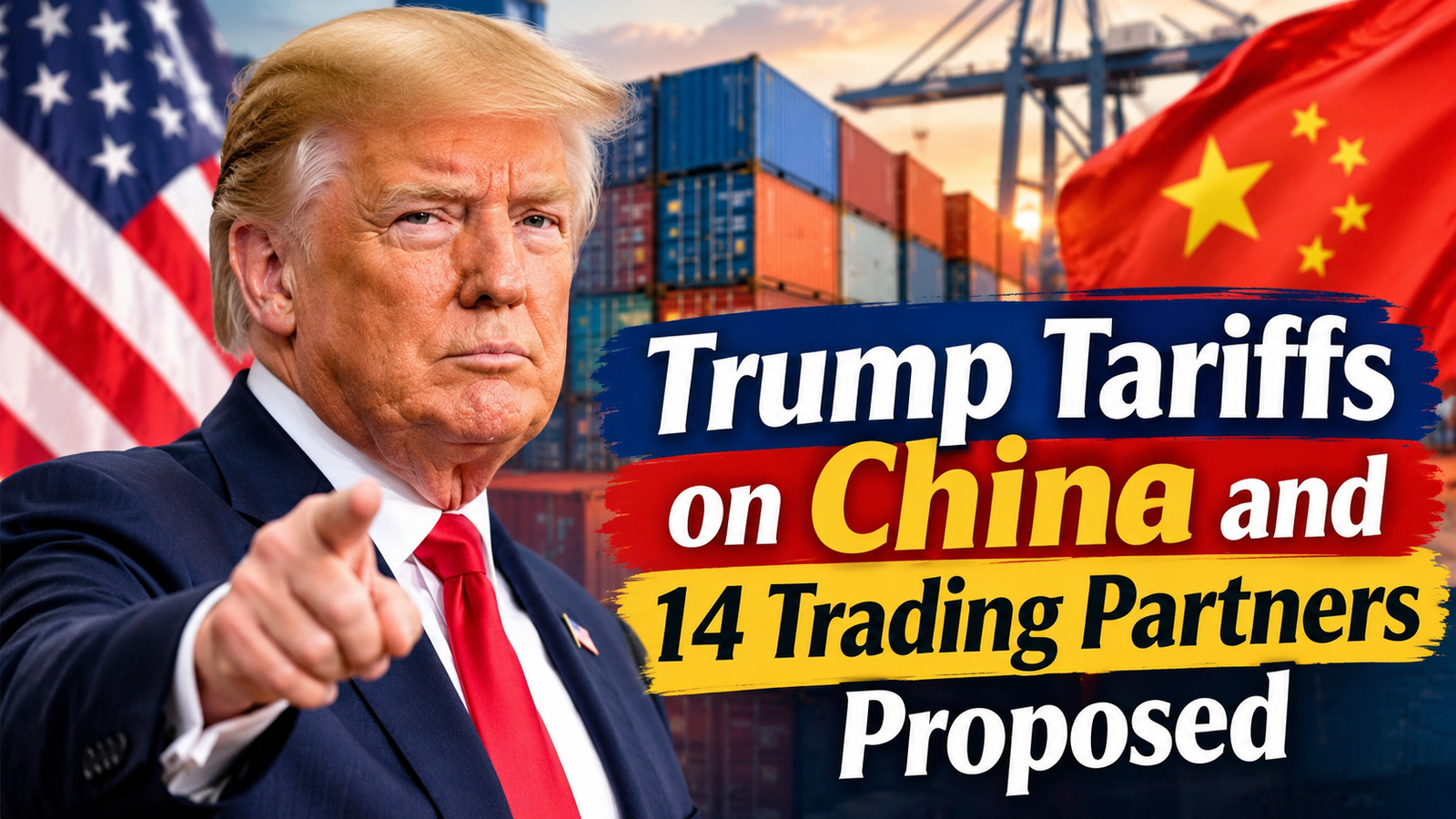
The Trump administration has proposed new tariffs on China and 13 other trading partners. The move could increase trade tensions and raise costs for businesses importing goods into the United States.
The proposal follows investigations into manufacturing policies that Washington says give foreign companies an unfair advantage. The affected economies include the European Union, India, Japan, South Korea, Vietnam, and Taiwan.
According to the Office of the United States Trade Representative (USTR), China could face additional tariffs of up to 20%. Meanwhile, proposed rates for other economies range from 15% to 35%, depending on the country and existing trade duties. Some products would also receive exemptions.
The administration says these measures aim to protect American manufacturers and workers. It argues that foreign governments support industries through financial aid, production incentives, and other policies that hurt U.S. businesses.
However, the tariffs are not final. The government is still seeking public comments and plans to hold hearings in January 2027. Therefore, the proposed duties could change before they take effect.
Tariffs are taxes on imported goods. As a result, businesses may face higher costs when buying products from overseas. Some companies could pass these costs to customers, making everyday goods more expensive. The proposal comes as many Americans remain concerned about rising living costs. If approved, the new tariffs could affect businesses, consumers, and global trade in the coming months.