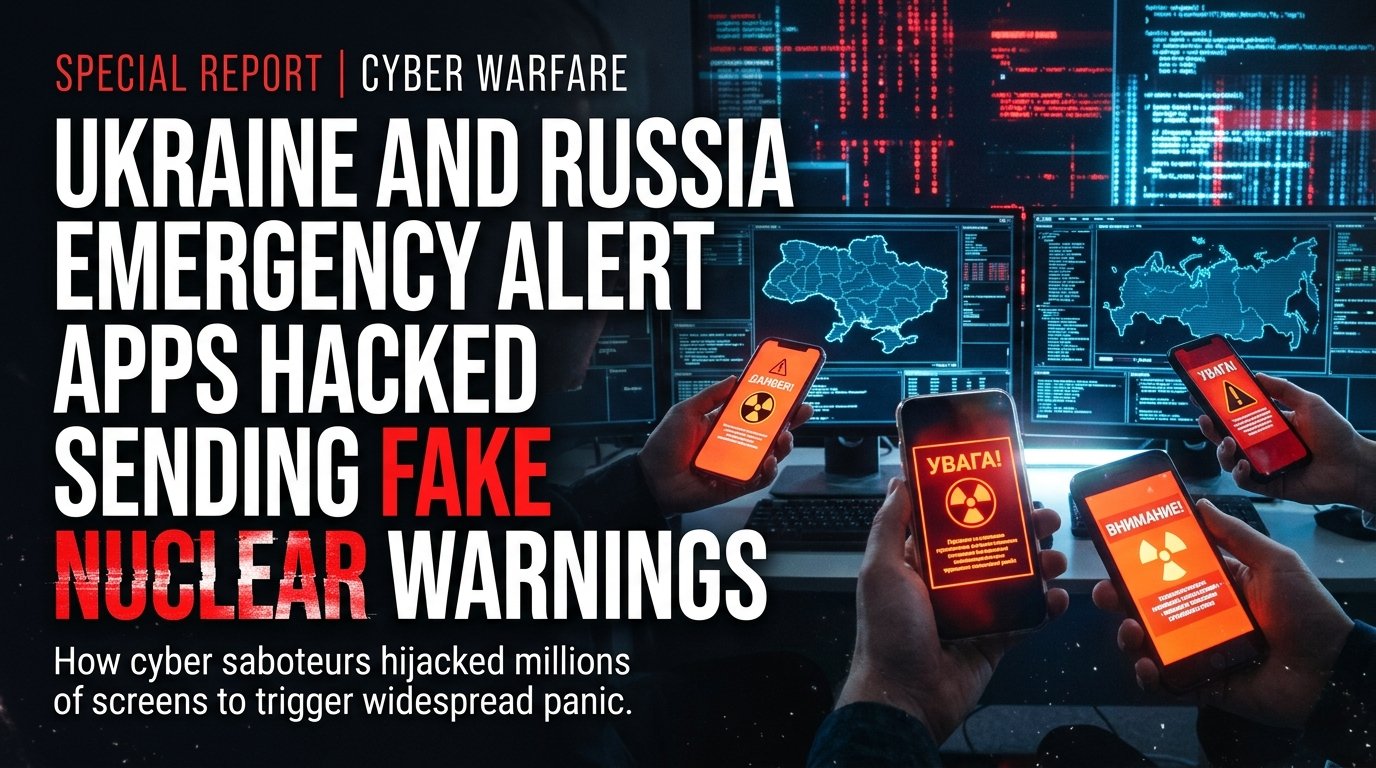
Emergency alert applications in Ukraine and Russia were targeted by cyberattacks overnight, sending false warnings about nuclear strikes, radiation exposure and chemical threats to mobile phone users. The incidents occurred within hours of each other on November 1 and 2, 2026, prompting authorities in both countries to investigate the breaches and warn residents against trusting suspicious notifications. The attacks affected digital services used to communicate important safety information during the ongoing Russia-Ukraine war. However, officials confirmed that the alarming nuclear warnings did not represent an actual nuclear emergency.
Ukraine’s Air Alert application began distributing unusual notifications late on November 1. The messages warned users about a possible radiation emergency in Kyiv, a chemical attack and alleged street fighting in the capital. One particularly alarming notification referred to Russia’s Oreshnik missile and suggested that a nuclear alert was imminent across Ukraine. The suspicious messages started appearing at approximately 10:47 p.m. local time. Ukrainian authorities quickly responded, telling residents that the information was false and that the application appeared to have been compromised. Ukraine’s Air Force confirmed the situation through its official Telegram channel. Officials specifically denied any radiation threat and urged the public to remain calm and follow verified updates.
The country’s Centre for Countering Disinformation also warned users that the notifications did not reflect the actual threat situation. Authorities advised residents to use official communication channels and avoid suspicious links included in the fraudulent messages. The Air Alert app is an important civilian safety service in Ukraine. Developed by Ajax Systems and Stfalcon with support from the Ministry of Digital Transformation, it informs users about incoming missile, drone and other aerial threats. Following the incident, the application was temporarily suspended, and its notification services were disrupted. However, Ukraine’s Ministry of Digital Transformation confirmed that other public warning methods, including air raid sirens, continued to operate.
Russia’s Emergency App Hit by a Separate Cyberattack
Several hours after the Ukrainian incident, Russia reported a similar attack against the mobile application operated by its Emergency Ministry. Russian users received fraudulent notifications claiming that nuclear warheads had been launched across the country. The messages also instructed people to stock up on food and seek shelter in basements. Russia’s Emergencies Ministry acknowledged that its application had experienced a major cyberattack. The ministry confirmed that attackers had managed to distribute false information through the service.
According to reports from Russian media, the ministry began working to restore the affected application and address the security problem. Officials also reassured residents that the country’s wider public warning infrastructure remained operational. This included alternative communication methods used to distribute emergency information. There was no immediate confirmation that the attacks against the Ukrainian and Russian applications were connected. Authorities in both countries had not publicly established the identities of those responsible.
The attacks have highlighted the risks associated with relying on digital communication systems during an active military conflict. Emergency alert applications play an important role in helping civilians respond to incoming missiles, drones and other potential dangers. In Ukraine, where Russian aerial attacks remain a serious concern, residents often depend on timely notifications to decide when to seek shelter.
False emergency messages can therefore create serious problems. They can cause unnecessary panic, spread misinformation and weaken public confidence in official warning systems. Ukraine’s Air Force spokesman Yurii Ihnat said the incident had not affected the country’s military security operations. He also explained that the public Air Alert application was separate from the military’s command systems. Similarly, Russian authorities said the attack on their mobile application had not disrupted the wider public warning infrastructure.
The incidents demonstrate how cyberattacks can target civilian communication services without necessarily affecting military operations. They also underline the importance of maintaining alternative warning channels when digital systems become unreliable. For residents in both countries, authorities’ advice remains important: verify emergency information through official sources and do not follow links contained in suspicious notifications.