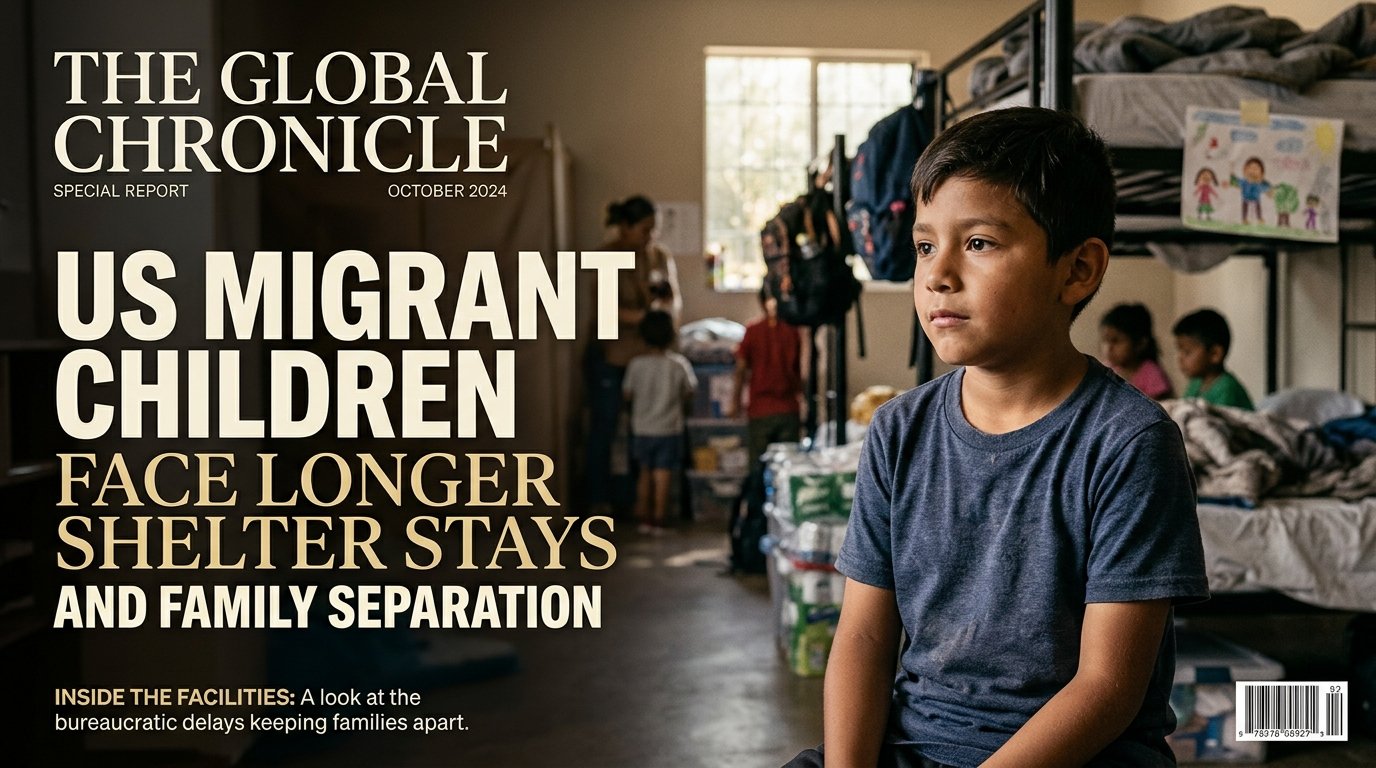
Thousands of children who arrive in the United States without a parent or legal guardian are facing growing uncertainty over their future. Longer stays in government-run shelters, difficulties with family reunification and changes to immigration procedures have raised fresh concerns about the treatment of unaccompanied migrant children. An investigation by KFF Health News has documented cases in which children remained in federal custody for months while their parents or relatives dealt with immigration detention.
One particularly concerning case involved a nine-year-old girl from El Salvador who spent 281 days in a Texas-area shelter before returning to her home country with her mother. The situation has brought renewed attention to US migrant children and the challenges they face under changing immigration enforcement policies. It has also raised questions about whether the government can protect vulnerable children while ensuring they have a fair opportunity to reunite with their families.
Longer Shelter Stays Raise Concerns About Child Welfare
The US Department of Health and Human Services (HHS) is responsible for overseeing the Office of Refugee Resettlement (ORR). The agency manages the care and placement of children who enter the country without a parent or legal guardian.
One of ORR’s main responsibilities is to identify suitable sponsors, typically parents or other relatives, who can provide a safe living environment. However, immigration enforcement and additional screening requirements can complicate the process.
According to the KFF Health News investigation, nearly 1,900 children were living in ORR-supervised shelters as of September 2026. Average stays had also increased to almost six months under the administration’s revised approach.
Previously, children generally spent about a month in federal custody while officials assessed potential sponsors. The reported increase has raised concerns among immigration lawyers and child welfare advocates, who say prolonged institutional stays can add to the emotional difficulties children already experience.
The central challenge is finding a balance between proper sponsor screening and timely family reunification. Authorities must protect children from unsafe placements, but unnecessary delays can leave them separated from relatives who may be able to care for them.
Immigration Detention Creates Barriers to Family Reunification
The experience of a mother identified as Carmen in the KFF investigation illustrates how immigration enforcement can affect family reunification. Her nine-year-old daughter travelled from El Salvador with her older sister in late 2025. The children hoped to join their mother and brother, who were living in Tennessee. After crossing the Rio Grande, the sisters entered federal custody and were placed in a shelter in Texas.
The older sister was later released after turning 18. However, the younger child remained in government care. Carmen completed several requirements to become her daughter’s sponsor. These included submitting financial information, providing fingerprints and completing a home assessment. She also attended a DNA testing appointment in April, which she understood to be the final step before reunification.
Instead, immigration officers detained her during the appointment and transferred her to a facility in Louisiana. Following her detention, ORR rejected her sponsorship application because she was in immigration custody. The decision left the child separated from her mother despite the family’s preparations for her return. Relatives had reportedly prepared a bedroom for the girl, but the reunification process could not move forward.
The separation continued for months. According to the reporting, the child experienced loneliness and emotional distress while her mother faced immigration proceedings. In July, Carmen decided that she could no longer bear the emotional impact of the separation on her daughter. The family requested to return to El Salvador together. They were sent back in September 2026, after the girl had spent 281 days in federal custody. The family’s return did not bring everyone together. Her older siblings remained in the United States and continued dealing with their own immigration cases.
Mental Health Risks Add to Concerns Over Migrant Children
Extended stays in immigration shelters can create additional difficulties for children who have already experienced violence, displacement or separation from their families. Medical professionals and child welfare advocates have warned that prolonged uncertainty can contribute to anxiety, depression and other signs of psychological distress. Some children may also experience sleep problems, changes in behaviour and symptoms associated with trauma.
Sural Shah, a physician involved in American Academy of Paediatrics visits to migrant shelters, described concerning symptoms among children in the facilities in comments reported by KFF Health News. These included developmental regression, nighttime distress and self-harming behaviour. Such concerns highlight why access to appropriate mental health services is important for children in federal custody. Support should address both their immediate emotional needs and the experiences that may have contributed to their migration.
At the same time, sponsor screening remains an essential part of child protection. A 2024 investigation by the HHS Office of Inspector General identified weaknesses in the screening process during an earlier increase in the number of unaccompanied children. This creates a difficult responsibility for federal authorities. They must identify safe and suitable sponsors without allowing administrative delays to keep children away from their families for unnecessarily long periods.
Federal Lawsuit Challenges Changes to Children’s Asylum Process
Concerns about US migrant children extend beyond shelter conditions and family reunification. Changes to asylum procedures have also become the subject of a federal court challenge. On October 15, 2026, several legal service organisations filed a lawsuit known as The Door v. Edlow in the US District Court for the District of Maryland. The case challenges government procedures that plaintiffs say make it harder for unaccompanied children to pursue asylum claims and receive legal assistance.
The organisations argue that shorter notification periods for asylum interviews and tighter restrictions on rescheduling appointments could prevent children and their lawyers from preparing their cases properly. The lawsuit also raises wider concerns about the government’s approach to immigration proceedings involving vulnerable minors. Its claims remain subject to the legal process, and the case does not itself establish that every challenged policy is unlawful.
A significant development followed on October 30, when US District Judge Brendan Hurson issued a temporary order blocking certain changes to asylum interview procedures. According to the court order, the government must restore at least 21 days’ advance written notice for asylum interviews involving unaccompanied children. The order also suspends the policy requiring exceptional circumstances to reschedule interviews and restores previous rescheduling protections. The temporary order was scheduled to expire at noon on November 13, 2026, unless the court extended it or issued another ruling. The decision is an important development for children seeking asylum and the lawyers representing them. However, it does not settle the wider debate over immigration shelter stays, detention practices or family reunification.
What Happens Next for Unaccompanied Migrant Children?
The challenges facing unaccompanied migrant children involve several parts of the US immigration system. Shelter placements, sponsor checks, immigration detention and asylum proceedings can all influence how long children remain separated from their families. The recent court intervention addresses specific asylum interview procedures, while the wider questions about shelter stays and reunification remain unresolved. For child welfare advocates, the priority is ensuring that children receive appropriate care, access to legal representation and timely consideration of safe family placements.
At the same time, federal authorities must maintain safeguards that protect minors from exploitation and unsafe sponsors. The case of the young girl from El Salvador shows the human consequences that can follow when these processes become prolonged. Her family ultimately chose to leave the United States together, while her older siblings remained behind. As legal proceedings continue, the treatment of US migrant children is likely to remain an important issue in the wider debate over immigration enforcement, child protection and access to asylum.